L’Aurore
In Search of Lost TimeL’Aurore is the newspaper the Prince de Guermantes begins reading each day as evidence undermines his belief in Alfred Dreyfus’s guilt. Its presence in the Princess de Guermantes’s rooms exposes a parallel, more private history of conviction: she has been following the paper and supporting Dreyfus before her husband knows it. The newspaper thus serves both as a source of political information and as a material sign of beliefs kept from view within a marriage and a social world divided by the Affair.
Reading and changing conviction
The Prince recounts to Charles Swann how his doubts began with reports of serious irregularities in Dreyfus’s trial. His concern deepened as he studied material he had previously refused to read. After the Henry document was revealed to be a forgery, he started reading Le Siècle and L’Aurore every day. The sequence ties the newspaper to a change grounded in the developing case: the Prince moves from loyalty to the Army and confidence in the verdict toward belief that Dreyfus may be innocent.
The Princess’s hidden reading
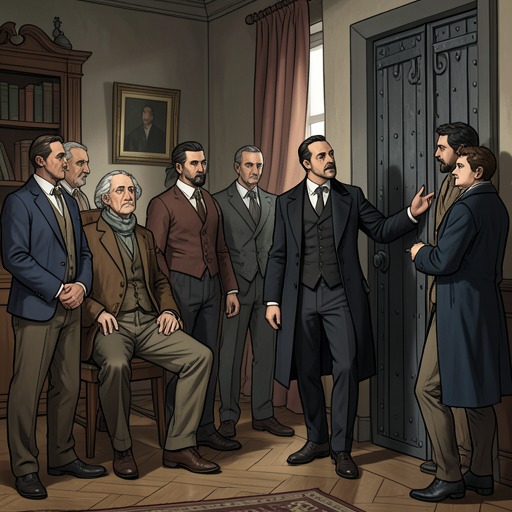
The Prince initially keeps his suspicions from his wife, fearing that they would distress her patriotic feelings. When he sees her maid trying to conceal something, the incident unsettles him; he later learns that the maid has been buying L’Aurore for the Princess each morning. The newspaper reveals that the Princess has privately shared his eventual position for longer than he has, while each spouse has been trying to shield the other from a politically painful disclosure.
From private evidence to social conflict
The paper’s role belongs to an Affair whose meaning has expanded beyond a dispute about the trial. In aristocratic society, opposition to Dreyfus has grown more forceful and become entangled with patriotism, militarism, and social allegiance. Basin de Guermantes treats Charles Swann’s support for Dreyfus as a public affront and as evidence against Jews collectively, while the Prince’s account shows how reading and reconsidering the case can unsettle a settled political identity. L’Aurore stands within this conflict not as an abstract emblem but as something read daily, hidden by a maid, and capable of changing what spouses believe they can say to one another.
Narrative significance
The newspaper links public argument to domestic secrecy and personal persuasion. The Prince discovers the Princess’s reading only after recounting his own slow conversion to Swann; what had seemed to separate him from his wife turns out to have concealed their agreement. Later, Basin de Guermantes’s change of position after encountering women who defend Dreyfus shows how political views continue to shift through social contact. Across these episodes, L’Aurore is one concrete channel through which evidence enters private life, while its concealed copies make visible the uneven timing of conviction.